
Why Does Skin Type, Tone and Background Matter?
We don’t all age in the same way.
For one person, the first noticeable change may be fine lines around the eyes. For another, it may be uneven pigmentation, dryness, loss of firmness or changes in skin texture.
Your natural skin tone, tendency to pigment, oiliness or dryness, sensitivity, genetics, lifestyle and ethnic background can all influence how signs of skin ageing appear.
That is why an anti-ageing skincare routine that works beautifully for one person may be completely inappropriate for another.
Understanding how your own skin ages is often more useful than simply following the latest skincare trend.
What Happens to Our Skin as We Age?
Skin changes gradually throughout adulthood.
Over time, changes can occur in collagen and elastin, skin hydration, barrier function and the way the skin responds to environmental exposure.
Cumulative ultraviolet (UV) exposure also plays an important role in visible skin ageing.
Common changes may include:
- fine lines and wrinkles
- increased dryness
- uneven skin texture
- pigmentation and uneven skin tone
- changes in firmness and elasticity
- increased sensitivity in some people.
However, these changes do not appear at the same age or to the same degree in everyone.
Why Does Skin Age Differently Between People?
There are two broad influences on skin ageing.
Intrinsic ageing refers to the natural biological changes that occur over time and are influenced partly by genetics.
Extrinsic ageing relates to external influences such as UV exposure, smoking, pollution and other environmental and lifestyle factors.
Natural skin pigmentation also influences the way some signs of photoageing appear.
This means two people of exactly the same age can have very different skin concerns — and therefore very different skincare priorities.
Why Skin Colour Matters in Anti-Ageing Skincare
Melanin provides some natural protection against ultraviolet radiation.
As a result, visible photoageing can present differently across skin tones.
People with lighter skin tones may notice fine lines, wrinkles, redness and visible sun-related changes earlier.
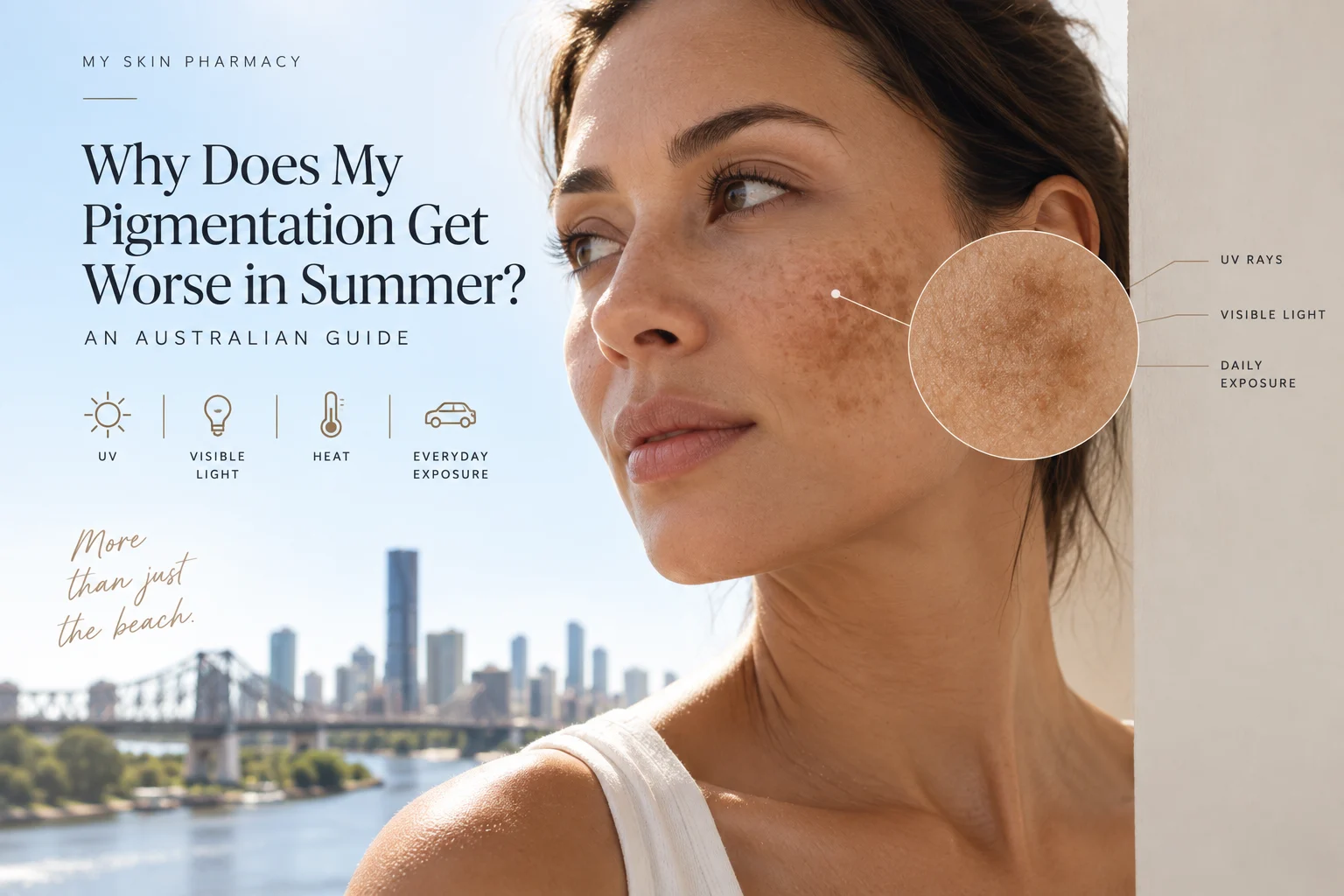
People with medium to deeper skin tones may develop some visible wrinkles later but can be more concerned by uneven pigmentation, post-inflammatory hyperpigmentation and changes in skin tone.
This does not mean that everyone with darker skin will experience pigmentation or that everyone with lighter skin will develop wrinkles early.
Skin tone is one consideration, not a complete skincare diagnosis.
How Ethnicity and Genetics Can Influence Skin Ageing
Ethnicity is often discussed in skincare, but it needs to be considered carefully.
There can be differences in melanin content, skin structure and susceptibility to particular skin concerns between populations. Genetics may also influence how readily someone develops pigmentation, dryness, redness or certain signs of ageing.
But there is enormous variation within every ethnic group.
Being Asian, for example, does not automatically tell us whether someone’s skin is oily, dry, sensitive or pigmentation-prone.
Similarly, two people with similar skin colour may have completely different skincare needs.
A better approach is to consider ethnic and genetic background alongside the person’s actual skin characteristics, history and concerns.
Different Skin Types Need Different Anti-Ageing Priorities
There is no universal anti-ageing routine.
Here are some examples of how priorities may differ.
Fair, Sun-Sensitive Skin
Someone with naturally fair skin who burns easily may notice fine lines, redness, uneven texture or visible signs of cumulative sun exposure.
Their skincare priorities may include:
- consistent sun protection
- maintaining skin hydration
- supporting the skin barrier
- avoiding unnecessary irritation
- introducing active skincare according to tolerance.
For this skin type, continually adding stronger products can sometimes create more sensitivity rather than a better routine.
Medium or Olive, Pigmentation-Prone Skin
Someone with medium or olive skin may be less concerned about early fine lines and more concerned about uneven skin tone, pigmentation or marks that remain after inflammation.
Their routine may therefore place greater emphasis on:
- consistent sun protection
- minimising unnecessary inflammation
- maintaining the skin barrier
- addressing the cause of recurrent pigmentation
- introducing active skincare gradually.
For pigmentation-prone skin, irritation matters. A product that repeatedly causes inflammation may work against the overall skincare goal.
Deeper Skin Tones
People with deeper skin tones can experience many of the same signs of ageing as lighter skin, but the pattern may be different.
Uneven pigmentation and post-inflammatory hyperpigmentation may be particularly noticeable, while some visible signs of photoageing may develop differently.
Skincare priorities may include:
- maintaining an even-looking skin tone
- avoiding unnecessary irritation and inflammation
- supporting skin barrier health
- appropriate sun protection
- choosing skincare according to individual sensitivity.
Aggressive skincare is not automatically better skincare.
Asian Skin and Pigmentation Concerns
There is considerable diversity within Asian skin tones and skin types, so there is no single “Asian skincare routine”.
However, pigmentation and uneven skin tone can be prominent concerns for some people of Asian backgrounds.
For someone who develops pigmentation easily after acne or irritation, an anti-ageing routine that repeatedly causes inflammation may be counterproductive.
A more considered approach may prioritise:
- sun protection
- skin barrier health
- gradual introduction of active skincare
- management of underlying inflammation
- avoiding excessive exfoliation.
The individual’s skin response matters more than ethnicity alone.
Dry or Menopause-Affected Skin
Skin can become drier with age, and some people notice significant changes in hydration and skin comfort around menopause.
A routine designed for oily skin in someone’s 30s may therefore no longer suit the same person later in life.
Priorities may shift towards:
- gentle cleansing
- increased moisturisation
- supporting the skin barrier
- reducing unnecessary irritation
- adjusting the frequency of active skincare according to tolerance.
Sometimes the most useful change is not adding another product — it is changing how the existing routine is used.
Oily or Acne-Prone Mature Skin
Ageing skin is not necessarily dry skin.
Some adults continue to experience oiliness, congestion or acne while simultaneously developing fine lines, pigmentation or other age-related concerns.
This creates a different balancing act.
Overly rich skincare may feel uncomfortable or contribute to congestion, while an aggressive acne-focused routine may leave the skin irritated and dehydrated.
The routine therefore needs to consider both concerns at the same time, rather than treating the person as simply having “mature skin” or “acne-prone skin”.
Sensitive or Reactive Skin
Sensitive skin often needs a different approach again.
Introducing multiple active products simultaneously can make it difficult to identify what the skin actually tolerates.
For sensitive or reactive skin, priorities may include:
- keeping the routine relatively simple
- maintaining the skin barrier
- introducing changes gradually
- monitoring for persistent redness, dryness or irritation
- avoiding the assumption that tingling or peeling means a product is working.
A sophisticated routine does not need to be an aggressive one.
What Does a Personalised Anti-Ageing Routine Actually Consider?
Personalised skincare should involve more than selecting products according to age.
Someone who is 40 does not automatically need the same routine as every other 40-year-old.
A more useful assessment considers:
Skin type: Is the skin naturally dry, oily, combination or balanced?
Skin tone: Is the skin particularly prone to pigmentation or visible sun-related changes?
Sensitivity: How readily does the skin become irritated?
Current concerns: Are pigmentation, fine lines, dryness, texture, acne or redness the main priority?
Skin history: Has the person experienced acne, eczema, pigmentation or reactions to skincare previously?
Current routine: Sometimes the problem is not what’s missing but how many products are already being used.
Lifestyle and environmental exposure: Sun exposure and other environmental factors can influence the skin over time.
Relevant medical history: Changes in skin may sometimes occur alongside hormonal or other health changes.
These factors create a much more useful picture than age alone.
Should Your Skincare Routine Change as You Age?
Yes, it may need to.
The skincare routine that suited you at 25 may not necessarily be the routine your skin prefers at 35, 45 or 55.
Skin hydration, sensitivity, oil production and individual concerns can change over time.
Rather than following a rigid “anti-ageing protocol”, periodically reassess what your skin actually needs.
Does Stronger Skincare Mean Better Anti-Ageing Results?
Not necessarily.
One of the biggest misconceptions in skincare is that stronger, more complicated routines must produce better results.
For some skin types, excessive exfoliation or poorly tolerated active skincare can lead to dryness, irritation and inflammation.
This is particularly relevant for people who are prone to post-inflammatory pigmentation.
The aim should be a consistent, well-tolerated routine appropriate for your skin, rather than using the maximum number of active products possible.
What Are the Foundations of an Anti-Ageing Skincare Routine?
Although individual routines differ, some general principles remain useful.
1. Sun Protection
Cumulative UV exposure is an important contributor to visible skin ageing.
Appropriate sun protection should therefore form the foundation of an anti-ageing skincare routine regardless of skin tone.
2. Support the Skin Barrier
Healthy-looking skin needs an appropriately functioning skin barrier.
Cleansing and moisturising should be chosen according to skin type and tolerance rather than age alone.
3. Address Your Main Concern
Don’t try to address every possible sign of ageing simultaneously.
Someone primarily concerned about pigmentation may need a different approach from someone whose main concern is dryness or sensitivity.
4. Introduce Changes Gradually
Adding several new products at once can increase the likelihood of irritation and makes it difficult to identify which product is responsible.
5. Reassess Your Skin
Skin changes.
A routine should be adjusted when your skin type, environment, hormonal stage or primary concerns change.
Frequently Asked Questions About Anti-Ageing Skincare
What age should I start an anti-ageing skincare routine?
There is no single age at which everyone needs an “anti-ageing” routine. Good skincare habits, particularly appropriate sun protection and maintaining skin health, are relevant throughout adulthood.
Does darker skin need anti-ageing skincare?
Yes. Every skin tone undergoes age-related changes. However, the visible signs and individual priorities can differ between skin tones.
Is pigmentation a sign of skin ageing?
Pigmentation can have many causes. Cumulative sun exposure can contribute to some pigmentation changes, while other forms may be associated with inflammation, hormones or other factors.
Why is my skin becoming drier as I get older?
Skin barrier function, oil production and hormonal changes can influence skin hydration over time. If dryness becomes persistent or significant, consider having your skincare routine reviewed.
Can oily skin still develop wrinkles?
Yes. Oiliness does not prevent the natural ageing process. Someone can have oily or acne-prone skin while also developing fine lines, pigmentation or changes in texture.
Does ethnicity determine which skincare I should use?
No. Ethnic and genetic background can provide useful context, but skincare should ultimately be based on the individual’s actual skin type, skin tone, sensitivity, concerns and history.
Your Skin Is More Than Your Age
Good anti-ageing skincare is not about following a standard routine because you have reached a particular birthday.
A 35-year-old with fair, dry, sensitive skin may need a very different approach from a 35-year-old with deeper, oily, pigmentation-prone skin.
Understanding those differences allows skincare to become more considered, more individual and more appropriate for the skin you actually have.
Want a Skincare Routine Tailored to Your Skin? 💬
Our pharmacists offer personalised skin consultations to help you better understand your skin type, skin tone, sensitivity and current skincare routine.
During your consultation, your pharmacist can review your individual skin concerns, relevant history, current products and skincare goals to provide personalised skincare advice.
🧴 Book a Skin Consultation with a Pharmacist
📞 Call us on 07 3039 1589
✉️ Email us at info@myskinpharmacy.com.au
Information provided in this article is general in nature and is not intended to replace individual medical advice. Skin concerns vary between individuals. If you have a persistent, changing or concerning skin condition, seek advice from an appropriately qualified healthcare professional.
What would you like to do next?
Shop our range, get personalised advice, or send us your prescription.