
If you’ve ever spent time researching pigmentation or melasma, you may have come across the name Kligman.
But Kligman wasn’t originally a product name or skincare brand.
It was a person.
Dr Albert M. Kligman was an American dermatologist and researcher whose work became part of the history of modern dermatology and our understanding of skin.
So who was the scientist behind the name — and why, more than 50 years later, does “Kligman” still appear in conversations about pigmentation?
Who Was Dr Albert Kligman?
Dr Albert M. Kligman was a dermatologist, researcher and academic whose career focused extensively on the biology of human skin.
His research covered several areas of dermatology and helped contribute to the evolving scientific understanding of how skin responds to environmental exposure, ageing and dermatological intervention.
For those interested in pigmentation, however, one particular piece of research made his name especially recognisable.
Why Is the Name Kligman Associated With Pigmentation?
In 1975, Dr Albert Kligman and Dr Ian Willis published a scientific paper investigating an approach to altering pigmentation in human skin.
Their work subsequently became widely associated with the term “Kligman’s formula” in dermatological literature.
The important point from a modern skincare perspective isn’t the historical recipe itself.
It is how much the science of pigmentation has continued to evolve since then.
Today, we understand that pigmentation is far more complex than simply trying to make an area of skin lighter.
What Have We Learned About Pigmentation Since Kligman’s Early Research?
Pigmentation is influenced by a complex interaction between melanin production, genetics, hormones, inflammation, ultraviolet exposure and an individual’s natural skin characteristics.
Even two people who appear to have the same type of facial pigmentation may have very different contributing factors.
This is particularly important with conditions such as melasma and post-inflammatory hyperpigmentation, where pigmentation can be persistent or recurrent.
Modern management therefore considers much more than the appearance of the pigment itself.
Why Does Skin Colour Matter?
Our natural skin colour is influenced largely by melanin.
Melanin also influences the way skin responds to inflammation and environmental exposure.
People with medium to deeper skin tones may experience more noticeable or persistent post-inflammatory hyperpigmentation following acne, eczema, irritation or skin injury.
For someone whose skin readily develops pigmentation after inflammation, repeatedly irritating the skin in an attempt to improve pigmentation can therefore be counterproductive.
This is one reason why pigmentation should never be approached as simply:
“How do we make this dark spot disappear?”
The better question is:
“Why is this person’s skin producing pigment here in the first place?”
Does Ethnicity Affect Pigmentation?
Ethnic and genetic background can influence how pigmentation presents, but ethnicity alone should never determine someone’s skincare.
There is enormous variation within every ethnic group.
For example, two people of Asian background may have completely different skin tones, levels of sensitivity, tendencies towards pigmentation and responses to skincare.
Similarly, two people with apparently similar deeper skin tones may have very different experiences with acne, inflammation and post-inflammatory pigmentation.
Rather than creating an “Asian skin routine”, “Indian skin routine” or “darker skin routine”, a more individual approach considers the person’s:
- natural skin tone
- tendency to develop pigmentation
- skin sensitivity
- history of acne or inflammation
- current skincare
- hormonal and environmental influences
- individual pigmentation pattern.
Your skin is more specific than your ethnicity.
Why Can Melasma Be So Persistent?
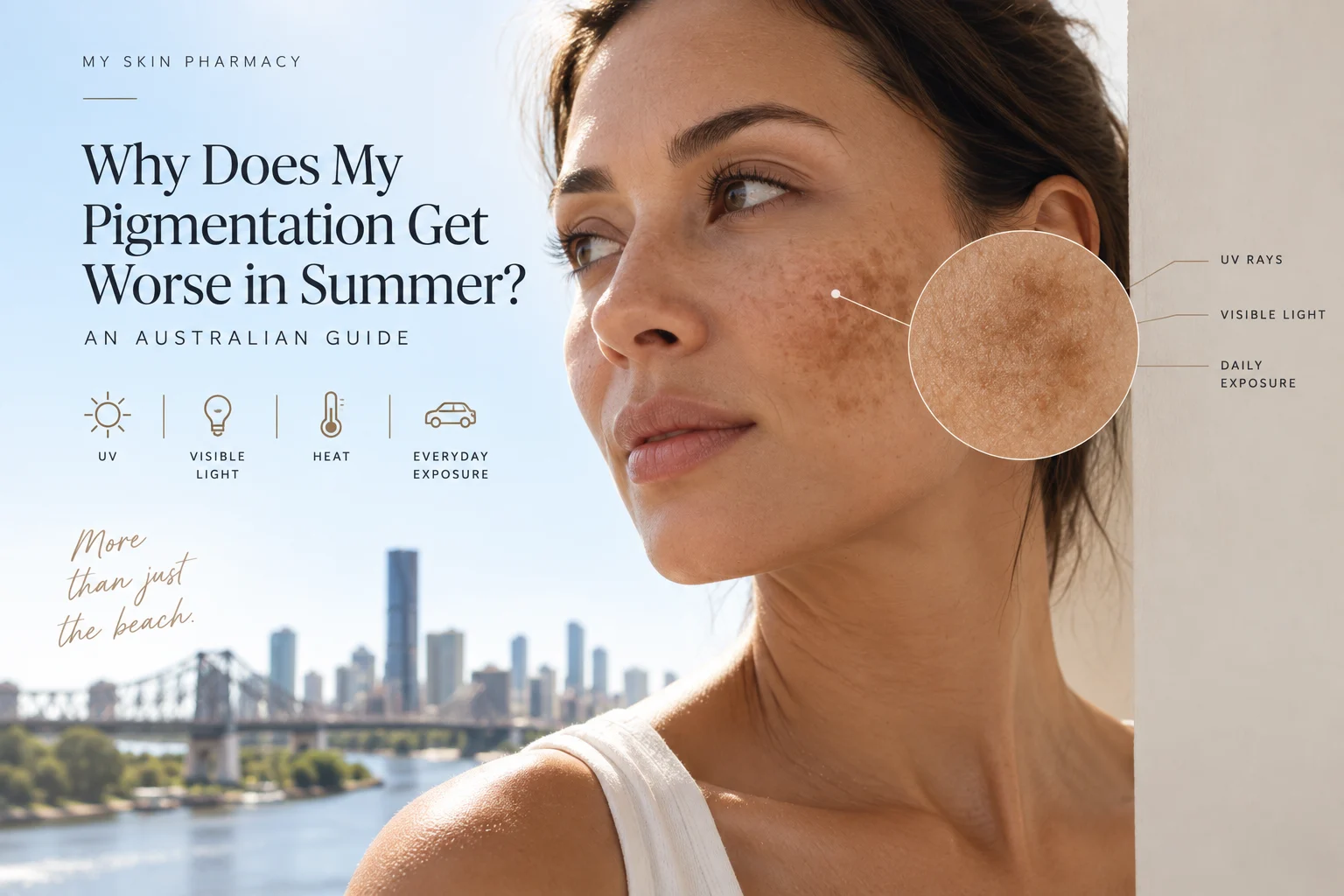
Melasma is a complex acquired pigmentation condition that commonly appears as symmetrical areas of facial pigmentation.
Its behaviour can be influenced by multiple factors rather than one single trigger.
This helps explain why someone may notice pigmentation improve and then return, or why two people with apparently similar melasma can have very different experiences.
It also means that simply copying another person’s skincare routine may not address the factors contributing to your own pigmentation.
Is Every Brown Patch on the Face Melasma?
No.
Not every area of facial pigmentation is melasma.
Post-inflammatory hyperpigmentation, sun-related pigmentation and other skin conditions can sometimes appear similar to an untrained eye.
Individual pigmented lesions also require particular care. A new, changing, irregular or otherwise concerning pigmented lesion should not simply be assumed to be cosmetic pigmentation.
If you’re uncertain about the cause of pigmentation, appropriate professional assessment is important.
Why Isn’t Pigmentation Skincare One-Size-Fits-All?
The history of dermatology is fascinating because it shows us how our understanding of skin continues to change.
We now know that pigmentation needs to be considered in the context of the whole person and their skin, rather than simply the colour of an individual patch.
Consider two people of the same age with facial pigmentation.
One may have fair, sensitive skin with cumulative sun exposure.
Another may have deeper, acne-prone skin that develops persistent pigmentation after almost every breakout.
They may both describe their concern as “pigmentation”, but their skin is behaving very differently.
A personalised skincare approach may therefore consider:
Skin tone: How readily does the skin pigment?
Skin sensitivity: Does the skin become irritated easily?
Skin barrier: Is there dryness, sensitivity or ongoing inflammation?
Pigmentation pattern: Is it localised, symmetrical, widespread or associated with previous inflammation?
Current skincare: Could something in the existing routine be contributing to irritation?
History: Has the person experienced acne, eczema, hormonal changes or previous pigmentation?
Environment and lifestyle: What ongoing environmental factors may be relevant?
These details can be much more useful than choosing skincare based on a pigmentation label alone.
What Can We Take From Kligman’s Legacy Today?
More than half a century after Kligman and Willis published their early pigmentation research, the science of skin continues to evolve.
Perhaps the most useful lesson is that good dermatological care evolves with the evidence.
Our understanding of pigmentation, skin colour, inflammation and individual skin biology is far more nuanced today than it was decades ago — and it will undoubtedly continue to change.
For patients, that means skincare does not need to be dictated by a trend, a viral routine or what worked for someone else.
Understanding your own skin remains the better place to start.
Frequently Asked Questions
Who was Kligman?
Dr Albert M. Kligman was an American dermatologist and researcher whose work contributed to several areas of skin research. His name became particularly well known in pigmentation literature following research published with Dr Ian Willis in 1975.
Why do I hear the name Kligman when researching melasma?
The name became associated historically with research by Kligman and Willis into human pigmentation. It continues to appear in dermatological literature and discussions of the history of pigmentation management.
Is Kligman a skincare brand?
No. The term originates from the surname of dermatologist and researcher Dr Albert Kligman.
Is all hyperpigmentation melasma?
No. Hyperpigmentation is a broad term describing increased pigmentation. Melasma is one particular pigmentation condition. Post-inflammatory and sun-related pigmentation are other examples.
Does darker skin need different pigmentation skincare?
Not automatically. However, skin tone, tendency to develop post-inflammatory pigmentation, sensitivity and previous reactions are all useful considerations when developing an individual skincare routine.
Should skincare be chosen according to ethnicity?
Ethnicity can provide useful background information, but it should not be used alone to determine someone’s skincare.
Individual skin tone, sensitivity, pigmentation tendency, current concerns and skin history provide a much more useful picture.
What Does This Mean for Your Skin Today?
The science of pigmentation has moved considerably beyond categorising skin by a single concern or following the same routine for everyone.
If you are experiencing facial pigmentation, some of the questions worth considering are:
- What type of pigmentation do I actually have?
- Is my skin fair, medium or deeply pigmented?
- Does my skin develop dark marks easily after acne or irritation?
- Am I naturally sensitive or reactive?
- Could my current skincare be contributing to inflammation?
- Have hormones, sun exposure or other factors coincided with the pigmentation?
- Has the pigmentation changed, or does it need medical assessment?
For example, someone with fair, dry and sun-sensitive skin may have very different skincare priorities from someone with deeper, acne-prone skin who develops persistent pigmentation after every breakout.
Likewise, two people with melasma may look similar at first glance but have different skin sensitivities, pigmentation tendencies, lifestyles and skincare histories.
This is why modern skincare is becoming increasingly individualised.
The question is no longer simply “What works for pigmentation?” It is “What is happening in this particular person’s skin?”
Not Sure What Type of Pigmentation You Have?
Our pharmacists offer personalised skincare consultations for people wanting help understanding their skin and current skincare routine.
During a consultation, we can consider your:
- skin type and natural skin tone
- pigmentation pattern
- tendency to develop pigmentation after inflammation
- sensitivity and skin barrier
- current skincare products and routine
- previous reactions to skincare
- individual skincare concerns and goals.
From there, your pharmacist can provide personalised skincare advice appropriate to your individual circumstances.
Want to Better Understand Your Skin? 💬
🧴 Book a Free Skincare Consultation with Our Pharmacist
📞 Call us on 07 3039 1589
✉️ Email us at info@myskinpharmacy.com.au
Information in this article is general educational information and is not intended to replace individual medical advice. If you have persistent or changing pigmentation, an uncertain diagnosis, or a new or changing pigmented lesion, seek advice from an appropriately qualified healthcare professional.
References
Kligman AM, Willis I. A new formula for depigmenting human skin. Archives of Dermatology. 1975;111(1):40–48.
What would you like to do next?
Shop our range, get personalised advice, or send us your prescription.