
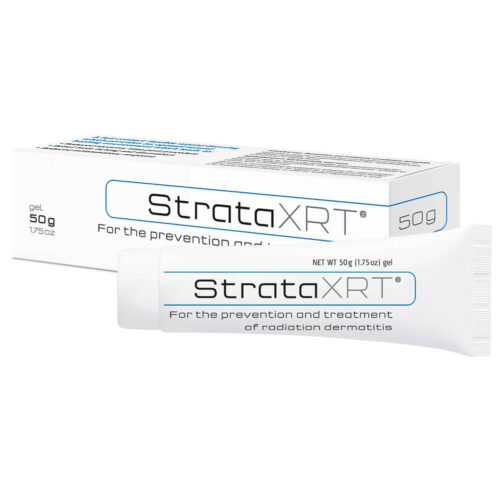
If you’ve heard of Strata XRT (sometimes written StrataXRT) but aren’t sure what it is or how it works, this blog will walk you through everything you need to know — in simple, practical terms.
We’ll explain:
- what Strata XRT is
- who it helps
- how to use it
- possible side effects
- FAQs
- and lifestyle tips for best results
What Is Strata XRT?
Strata XRT is a film-forming gel designed to protect and soothe the skin. It dries to form a thin, flexible, waterproof, gas-permeable protective layer over the skin — behaving like a gentle barrier dressing.
Key Features
- Gel dries into a protective barrier
- Helps manage irritation, dryness, flaking or redness
- Can be used from day one of radiation therapy
- Non-sticking, transparent and odourless
- Free of alcohols, parabens and fragrances
It was originally developed to prevent and treat radiation dermatitis — a common side effect of radiotherapy — but its soothing action makes it useful for superficial wounds and first/second-degree burns as well.
How Strata XRT Works
When the skin is inflamed, irritated or damaged, the natural barrier is disrupted. Strata XRT:
- forms a flexible protective film
- maintains a moist wound-healing environment
- reduces trans-epidermal water loss (TEWL)
- cushions against friction and irritation
- helps reduce redness, itching, heat and discomfort
Benefits at a Glance
| Benefit | How It Helps |
|---|---|
| Protects damaged skin | Acts like a barrier dressing |
| Helps reduce inflammation | Helps soothes redness, pain and heat |
| Moisture retention | Supports healing |
| Waterproof and breathable | Can be worn during daily activities |
| No bolus effect | Won’t interfere with radiation treatment |
Who Can Use Strata XRT?
Strata XRT is generally safe for people of all ages and all skin types, including those with sensitive skin. It’s commonly used for:
- radiation dermatitis (prevention and treatment)
- superficial wounds
- first and second-degree burns
- dry, itchy or irritated skin
- toxic or compromised skin conditions
- wounded skin that needs protection from friction
It does not contain steroids or harsh additives, making it suitable for people who are sensitive to strong topical ingredients.How to Apply Strata XRT (Step-by-Step)
 This guidance is based on manufacturer recommendations and clinical instructions — always follow your own healthcare provider’s advice.
Daily Use Instructions
- Clean and dry the affected area — remove any lotions, sweat or debris.
- Apply a very thin layer of Strata XRT directly to the affected site.
- Let it dry for about 5–6 minutes. If it takes longer, you’ve likely applied too much — gently wipe away the excess.
- Leave it on — it doesn’t need to be removed before radiation treatment.
- Cover with clothing, sunscreen or makeup once dry — it won’t interfere with those.
Strata XRT is typically used once or twice daily and should be maintained in contact with the skin most of the time for best results.
Lifestyle Tips
- Store Strata XRT in the fridge for a cool, soothing sensation when applied (especially useful after radiotherapy).
- Reapply after washing or bathing.
- Avoid rubbing or massaging — it doesn’t need to penetrate deeply to work.
How Long Should You Use It?
Strata XRT is recommended:
- from the first day of radiation therapy
- and continuously for at least 60–90 days after treatment
- or until no further improvement is seen
For chronic radiation dermatitis, it may be continued longer under medical advice.
Common Questions People Search on Google
Here are answers to frequently asked questions about Strata XRT:
1. What is radiation dermatitis?
Radiation dermatitis is a skin reaction caused by radiation therapy — symptoms range from redness and itching to peeling and ulceration. Many patients experience symptoms during and after radiotherapy.
2. Does Strata XRT prevent radiation burns?
Yes — its protective film helps manage skin reactions and may minimise severity. It does not block radiation but optimises healing and reduces irritation.
3. Can you use Strata XRT during radiation treatment?
Yes — it does not create a bolus effect, and radiation can be delivered over the film without alteration to the dose distribution.
4. Is Strata XRT suitable for sensitive skin?
Yes — it’s free from alcohol, parabens and fragrances, making it suitable for sensitive skin and children.
5. What if the gel doesn’t dry?
If it takes longer than ~6 minutes to dry, you probably applied too much — gently remove the excess and let the remaining gel dry.
6. Is it safe during pregnancy?
Manufacturer information suggests it is safe for use during pregnancy.
7. Can you apply it with moisturisers?
Yes — moisturisers can be used after Strata XRT has dried.
Possible Side Effects or Precautions
Despite its gentle formulation, be aware of:
Common and expected reactions
- Slight skin irritation or stinging (rare)
- Gel may stain clothing before it dries
Warnings & precautions
- For external use only
- Avoid contact with eyes
- Do not apply over other topical medications unless advised by a clinician
- Not suitable for highly exuding wounds or deep (third-degree) burns
If irritation persists or severe skin reactions develop, stop use and speak to your doctor or pharmacist.
Lifestyle Tips From Users (Online Experiences)
While individual results vary, many people online report:
- Applying Strata XRT gently twice daily during and after radiotherapy
- Noticing less redness and fewer open sores
- Combining with gentle moisturisers after the film has dried
- Avoiding too thick an initial layer helps it dry faster
Summary — Why Strata XRT Matters
Strata XRT is a specialised skin-protective gel ideal for:
- Radiation dermatitis prevention and therapy
- Superficial wound care
- Management of dry, inflamed or irritated skin
It’s easy to use, compatible with daily life, and generally well-tolerated — especially when used according to directions.
What would you like to do next?
Shop our range, get personalised advice, or send us your prescription.